At the very south of the Iberian Peninsula, where two oceans meet, lies a lovely Andalucian fishing town. Tarifa with its location has been an important strategic point for conquerors throughout history. Today however, the town is more famous for something completely different, and which attracts thousands of visitors from around the world. Namely surfing.
Tarifa, which is also the southernmost city on the European mainland, has occupied a strategic position at the Strait of Gibraltar since Phoenician times. The Phoenicians established a trade settlement on Isla de las Palomas, a small island just off Tarifa, which is now connected to the town by a causeway. After them came the Carthaginians and the Greeks. Today, however, the visitors are not here to conquer the land, but the sea and its waves.
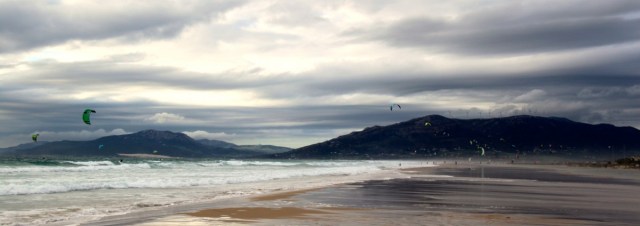
With the Mediterranean Ocean on one side and the Atlantic Ocean on the other, Tarifa holds a very special location and is known for its nearly permanent winds from both east and west. Along with the wonderful beaches Los Lances, Valdevaqueros and Punta Paloma, and crystal clear turquoise waters, this has made Tarifa a renowned and prime location especially for windsurfing and kitesurfing, also called kiteboarding.
Los Lances
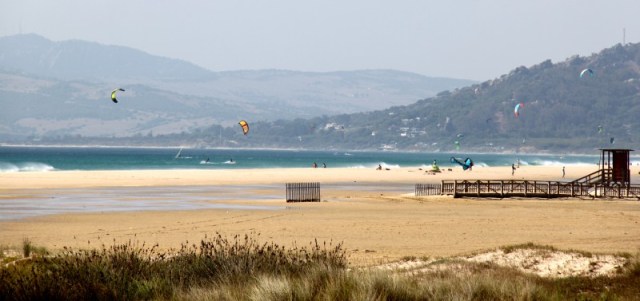
Located on the Atlantic side you will find the wide beach Los Lances, where you can daily observe a myriad of windsurfers and kiters. The whole thing is a very colourful spectacle. Here you can get perfect wind and wave conditions, and you will not find a better place in Europe to practice kite- and windsurfing. If you’re a beginner, it is not a big problem.  There are plenty of surf schools and friendly instructors willing to teach their skills and provide courses for those interested.
In winter you’ll have the wave season, with pleasant temperatures for different types of surfing, and offering even the more experienced surfers some major challenges. This period is also best for traditional surfing, wave surfing, and the most ideal conditions you will usually get early in the morning or later in the evening.
Tarifa and the campsites nearby are packed with water sport enthusiasts who are waiting impatiently for the perfect wind, perfect wave or simply regaining their breath after a very active day.
Historic Old Town
Although Tarifa is referred to as Europe’s kite capital, you certainly don’t need to be a surfing enthusiast to head here. And the old town of Tarifa offers both cultural and historic elements.
From the causeway between Isla de las Palomas and the mainland you will get the finest view of the city’s most prominent building, Castillo de Tarifa, and the fishing port, which is still very active. The castle, located in the old town, was built as a strategic point at the Strait of Gibraltar when Caliph Adberramán the third reigned. It is more commonly known as Castillo de Guzmán el Bueno, after King Guzmán the Good who sacrificed his son in the fight against the Arabs in 1294. The story has it that the king’s son was captured by the enemies, and in exchange for his son’s life the Arabs demanded Tarifa in return. The king chose to save the city, while his son was executed by the enemy.

Iglesia de San Mateo, which is the city’s main church, is located near the castle, surrounded by many great restaurants. The church was built in the early 1500s, and is mainly of late Gothic style with a neoclassical facade. It’s as like the glass paintings are glowing and the statues here exude something powerful. When Spain’s catholic kings tried to chase the Moors back to Africa, Tarifa was a very uneasy and unsafe place. To encourage people to live here, the church offered a huge amount of forgiveness to all who endured here for one year.
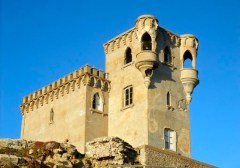
In front of the town’s harbour, you can see the little castle Santa Catalina. It was built in 1931 as an observation tower in a style from the 1500s. During the Spanish Civil War in 1936 it was changed and enhanced. General Francisco Franco took over and converted Santa Catalina into an ammunition warehouse and equipped it with concrete bunkers for military-defensive purposes.
Activities in beautiful scenery
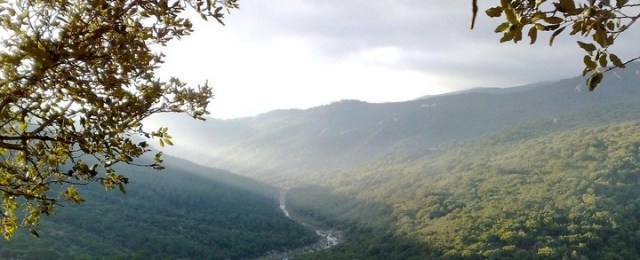
Tarifa is almost hidden between two beautiful nature parks, El Estrecho and Los Alcornocales. Approximately 60 percent of the areas surrounding Tarifa are protected, which means that the surroundings have more or less managed to preserve its original natural environment. The areas are ideal for walking or trekking.
You can also discover Tarifa’s beaches, dunes and special pine forest in the nature park Los Alcornocales from the back of a horse. There are guided horseback rides that take you along white sandy beaches with breathtaking views of Africa. The African continent is only 14 kilometers away, and you will forever remember the view from Tarifa’s beaches towards Tangier and Ceuta in Morocco. The Andalucian horses are known worldwide, and are easy to handle.
For those who are seeking a rush of adrenaline the hilly areas with their many trails are great for mountain biking. There are also several popular places where you can get the opportunity to test your climbing abilities, from absolute beginner level to the more advanced.
Underwater adventure
Scuba-diving is very popular along this part of the South-Spanish coast. It is estimated that in the Spanish waters there are located approximately 1500 shipwrecks, which in many cases hide various treasures of great historical value. By Huelva and in the Cadiz gulf are the areas of Spain with the greatest number of sunken ships. Mainly they belonged to the West Indian merchant fleet or were ships from the battle of Trafalgar. Nine of the fifteen French and Spanish ships that sank in the Battle of Trafalgar in 1805 against the British Navy remain under water near the coast of Huelva and Cadiz.
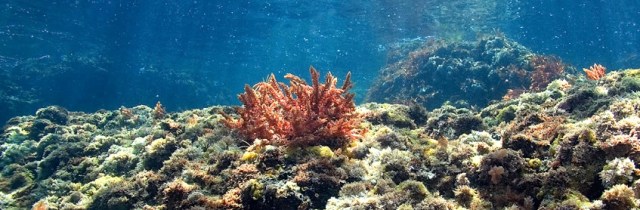
However, you do not need a diving certificate to enjoy the magnificent underwater scenery at Tarifa. Snorkelling is a favourite activity for many here, and there are several beautiful and exciting places to explore, especially around the island Las Palomas.
Excursions
18 kilometers west of Tarifa in a lovely bay you will find the tiny village Bolonia, which is known for its beautiful sandy beach. Here are several small restaurants and beach bars, definitely worth a visit. Located near the almost 4 kilometers long beach lie the ruins of the Roman city of Baelo Claudia. These ruins are considered to be the most complete Roman city ruins to as of now have been uncovered in Spain. Close by you can also find a large dune, which has a height of 30 meters and is one of the least altered landscapes in Costa de la Luz.

If you prefer to see animals in their natural habitat, then dolphin and whale watching in the Strait of Gibraltar is highly recommended. Here you can see killer whales, pilot whales, striped and common dolphins and sperm whales, all depending on what season it is. In Tarifa there are several companies offering such excursions, but you would do well to choose a day without too big waves.
From the port of Tarifa there are also several daily departures by fast ferry to Tangier, northwest of Morocco. Only 35 minutes away is the gateway to the African continent. Perfect for a day trip.
Approximately 6 kilometers east of Tarifa is a fantastic vantage point. On sunny days you can get a beautiful view of Africa, on the opposite side of the Strait of Gibraltar. In the background you can glimpse the silhouette of Mount Musa, which is 851 meters high. The mountain is also called one of the Pillars of Hercules. The other is the mountain of Gibraltar. To the left, you can also catch sight of Ceuta, a Spanish city on the African continent.
Shopping and nightlife
Leading all the way to the old town, the main road in Tarifa provides a quick impression that you definitely are at a surf spot. Here are plenty of surf shops all lined up, offering different types of boards, apparel and most of the equipment you need for most water activities. Several shops also offer equipment for hire.
In the old town, however, the stores are more intimate and each one has a more distinctive style. Here you will find everything from small fashion boutiques to alternative shops selling art and handmade jewelry.
Tarifa offers many opportunities to have fun, not to mention a varied and lively nightlife. Here reigns a relaxed, yet a real cosmopolitan atmosphere, with plenty of restaurants, bars, pubs and discos to choose from.
During daytime, you should head to Café Azul, located in the centre of Tarifa. In this small but nice coffee bar you can get a delicious breakfast or brunch. You can choose from great smoothies and fresh juices, yogurt with fresh fruit, fine Italian coffee, sweet and savoury pancakes, hot and cold sandwiches, dishes with eggs and more.
After a long day filled with lots of activities, it can be lovely to relax with a drink in a place like the surf bar Tomatito. Here you have to try the fresh strawberry mojito. It is worth the visit. If you’re a little hungry too, they serve simple food such as burgers, hot dogs and sandwiches.

Compared to other Spanish cities almost everything feels less formal in Tarifa. In some places it does not matter if you come wander in wearing surf shorts, a singlet and sandals with sand and sea salt in your hair. What matters are the chilled and relaxed vibes, and Tarifa is definitely a place where you can live out the real surf life.
 beachcastle