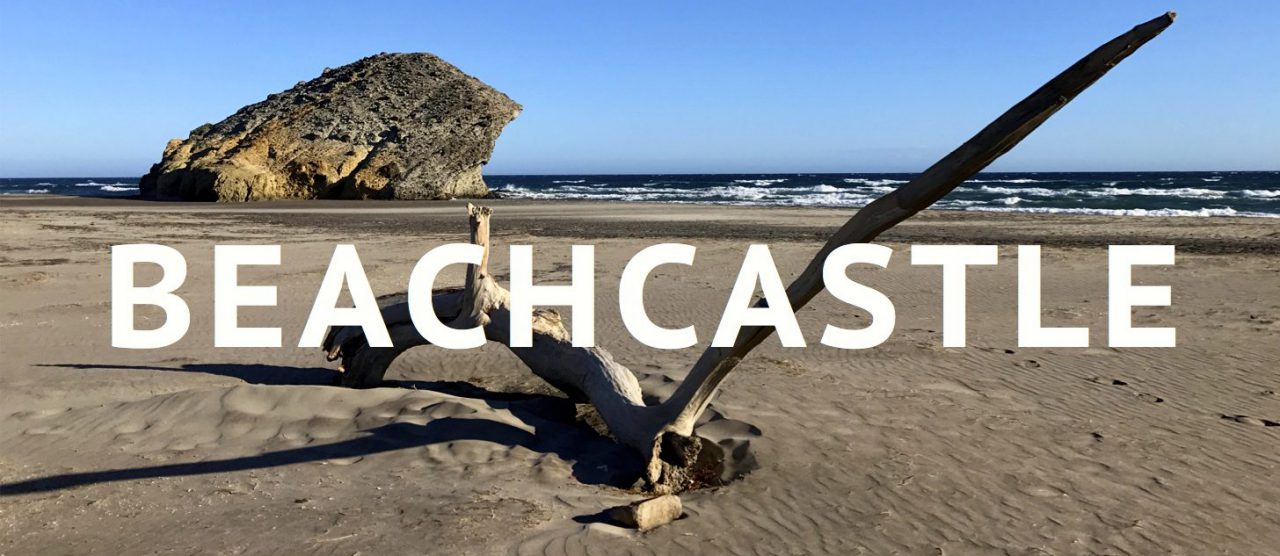
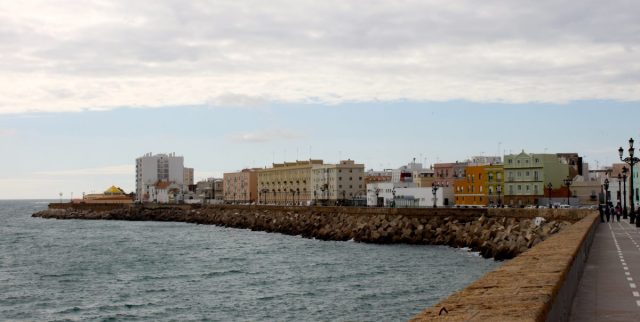
I’m on my way to the Spanish coast, southwest in the region of Andalucía, and the road leading there is something quite special. On the final stretch before reaching my destination, it almost feels like I’m driving on water. Only a thin strip of land on each side, separates the fine motorway from the ocean. And in front of me sparkles a real gem of a city – the port city of Cádiz.
Cádiz is the capital of the province with the same name, and one of Europe’s oldest cities. It’s in fact placed on a peninsula, and here you’ll get fresh sea air from all sides. The city is known for its charm, excellent seafood, relaxed atmosphere, clean air – and not least, its warm southern hospitality.
One city – two worlds
Cádiz city is divided into two parts, which differ significantly from each other. The newest part consists of a main avenue with hundreds of smaller side streets. Here you’ll find good shopping opportunities and all the amenities you expect of a modern Spanish city. Most of the major hotels are also located here.
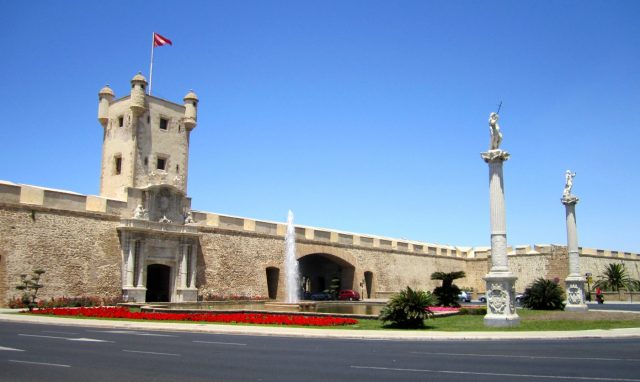
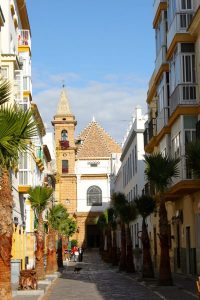
I’m passing through the gates Las Puertas de Tierra, and on the other side the world becomes another. It almost feels like I’ve traveled back in time. The well-preserved old town within the historic city walls is characterized by a myriad of narrow streets. These cobbled streets are filled with layer after layer of history, and in several places it’s pretty easy to discover clear historical imprints such as buildings and monuments from the different periods. Throughout the ages Cádiz has been occupied by the Romans and the Moors, been enriched by trade with the New World, built solid defences and gradually adapted to the modern age.
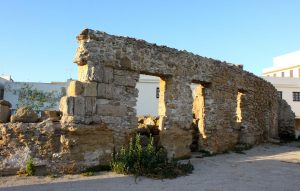
It is believed that Cádiz was founded by Phoenician sailors about 3,000 years ago, as a trading centre protected by simple fortifications. There have been made several archaeological findings all over the old town, and at the Plaza de Mina you can visit the Archaeological Museum, with two Phoenician stone sarcophagi among the key attractions. Another evidence of an ancient time is Teatro Romano. The remaining parts of the theatre were discovered in 1980 and it is considered to be the second largest Roman theatre in the world.
City walk
An easy way to get a quick overview of the city is to jump on one of the red double-decker tour buses with an open top. You can hop on and off at 12 stops that are located near the main sights. When purchasing a ticket on one of these buses, you’ll also get a discount on the admission to some of the city’s historic monuments.
However, I decide to wander through the old town, and if you’ve got the legs and the time, I think this is the best way to experience and explore Cádiz. You can find beautiful old buildings and monuments everywhere, and the sights are within relatively short walking distance of each other. During certain times of the day the streets here may seem almost deserted, and I find myself walking around virtually undisturbed.
Historical sights

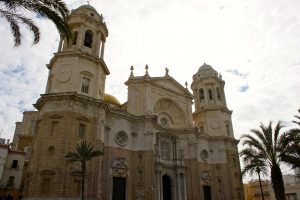
The Old Town offers a variety of great attractions, but particularly the city’s cathedral is impossible to miss. With its golden dome on top, Catedral de Santa Cruz, also known as Catedral Nueva, clearly stands out in the cityscape. The beautiful neoclassical cathedral is certainly worth a visit. One of its two bell towers, Poniente, is open to public, and from there you can get a great overview of the old town.
It is perhaps only one place that provides a better view. From the top of Torre Tavira, the highest and most important of the city’s old observation towers, you can get a truly breathtaking panoramic view of the city. In the 1700s Cádiz had 160 similar observation towers to monitor its harbour and the sea surrounding the city.
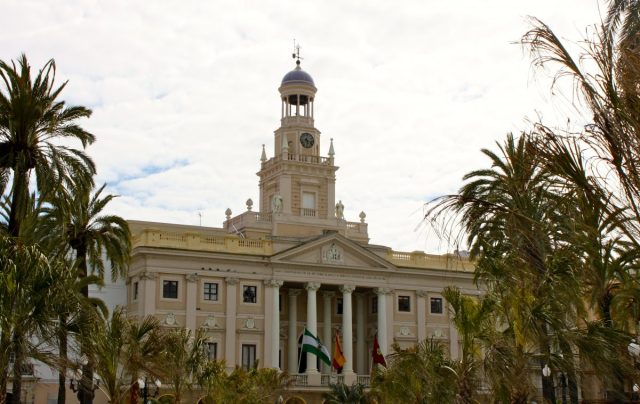

The city has several plazas and open spaces, where you can relax on one of the benches, have a delicious lunch at one of the many small restaurants, or simply just enjoy the beautiful surroundings.
One of the largest squares is Plaza San Juan de Dios, which contains a number of cafés, fountains and statues. Here you’ll find the famous City Hall as well as the official tourist information office.
Near Torre Tavira is Plaza de Topete. This triangular square is one of Cádiz’ most intimate. It consists of many nice flower stalls and is probably more known by its old name, Plaza de las Flores (Flowers square).

Close by I come across a large and quite special market, Mercado Central, also called Mercado de Abastos. It was built in 1837 and is the oldest market in Spain covered with roof. The best time to visit the market is during the morning hours. That’s when it’s at its loudest and busiest. Especially the fish section is quite impressive.
In the Old Town there are also several beautiful churches such as San Antonio and San Felipe Neri, where the first Spanish Constitution was signed.
Other points of interest are La Santa Cueva, which houses several paintings by Francisco José de Goya, and patrician mansions like Casa del Almirante and Casa de las Cadenas, just lying there as reminders of former greatness.
Cádiz by night
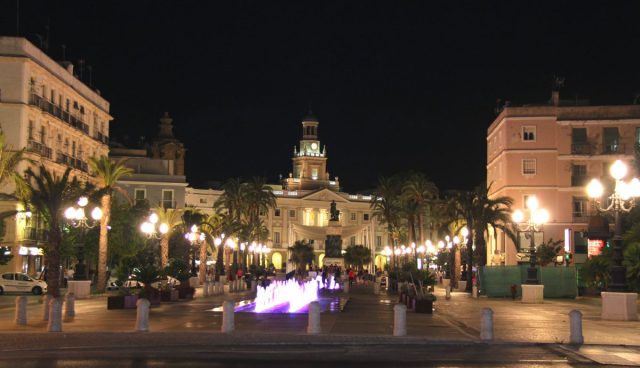
When night falls the streets happily springs to life. After the siesta the shop owners open their small shops, and both the locals and the tourists flock to the many cafés and restaurants that are located around the old town. Especially the tapas bars are very popular in Cádiz, and at times I find it difficult to get a table, or even a tiny space by the bar.

The nightlife in the old town can be quite lively and the many small bars contribute to give it all a good atmosphere. Cádiz even has its own university, and the students also play their part in creating good energy and a vibrant cityscape even into the late night hours.
Beach Life

Once in Cádiz with sea on all sides, it’s definitely worth visiting at least one of the gorgeous beaches. With its 300 days of sunshine, the beaches in Cádiz are essential to the locals and attract lots of visitors.
La Caleta
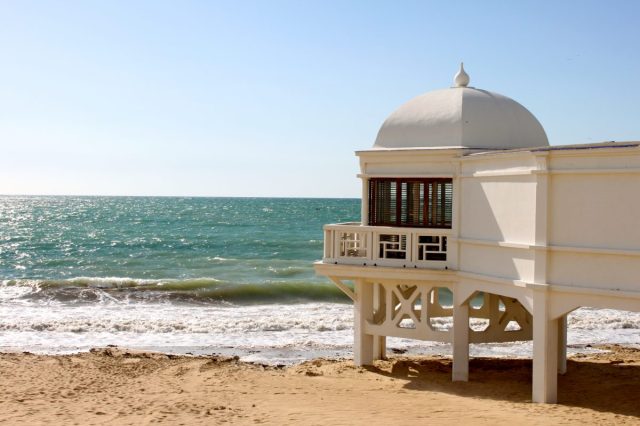
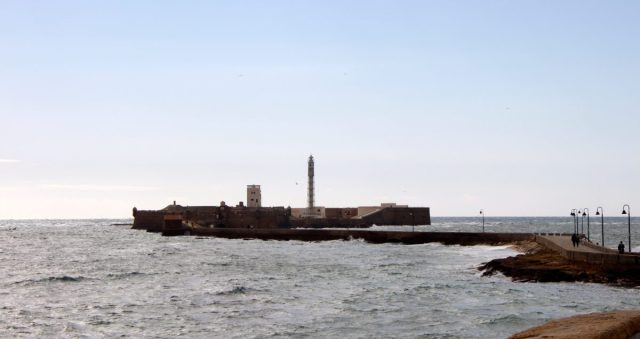
At the very tip of the peninsula between the two ancient fortresses Castillo de Santa Catalina and Castillo de San Sebastián, is perhaps the most beautiful beach in Cádiz city. Playa La Caleta is a small, but very popular beach. At sunset the cove attracts many small fishing boats, and it makes such a beautiful postcard scene.
Santa María del Mar and La Victoria
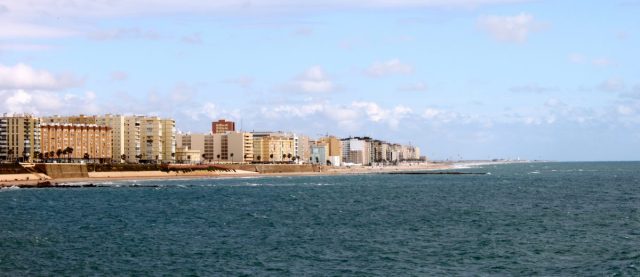
The beach Santa María del Mar is located just outside the historic city wall. It’s 650 meters long and consists of fine golden sand, which is held in place by two breakwaters at each end. In summer it can get really crowded, especially during the weekends. The beach has few facilities, but has a really pleasant promenade.
Next to Santa María del Mar is Playa de la Victoria. The 2.8 km-long urban beach has been repeatedly awarded for its high standard (Blue flag – www.blueflag.global), and is considered to be the most popular beach among the locals. Here it is possible to rent sun beds, umbrellas and pedal boats. There is also a high level of beach and water activities. Here you can even experience an outdoor cinema during the summer. At the seaside promenade there are several hotels, bars and restaurants, and the area is known for its vibrant nightlife.
Cortadura
Just south of the city lies another beach marked with the Blue flag. Playa de la Cortadura is an extension of La Victoria, and holds many of the same facilities as the neighboring beach. It is possible to park along the beach, which has several access points with wooden boardwalks between the naturally shaped and beautiful sand dunes.
El Chato and Torregorda
Playa del Chato and Playa de Torregorda are located on the outside of the strip of land that connects San Fernando and Cádiz city together, and extending alongside the road to Cádiz. In other words, several kilometers of lovely sandy beaches. Here you’ll find plenty of natural vegetation, both in the dunes and floating in the water, such as water lilies.
Because of the good wind conditions, especially at the beaches outside the city, it must feel like an eldorado for windsurfers and kite enthusiasts.
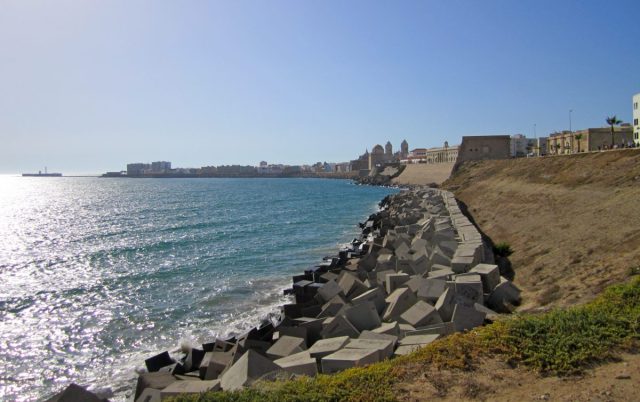
Cádiz is a popular destination to the Spanish people, but it really puzzles me that the city is not more commonly known outside the Spanish borders. Whether you’re here for a weekend, an extended vacation or just for a day – Cádiz is simply a beautiful experience.
 beachcastle